
IMPACT
COATED M2A work with a wide range of companies and research projects. As all projects are industrially focused, the sponsoring company get tangible outputs from each research engineer.
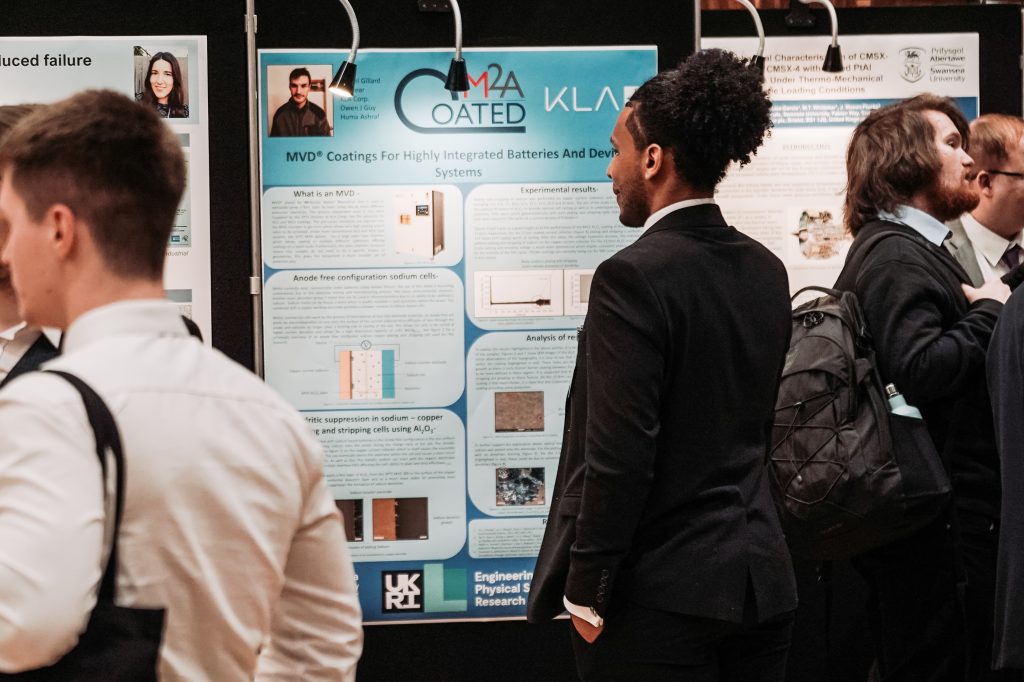
Overall, the aim of the operation is to deliver impact from the research we do. The nature of the projects means our research is directly applicable to industry, society and the clear benefits for the employability of our research engineers. The operation maintains a focus on the justification for the research and understanding the overall target impact of the project through the production of impact posters at the end of the first year, the inclusion of impact updates in annual reports and a final impact report at the end of the project. Additionally the researchers are focussed on the potential impact they can make on the research environment with a keen eye kept on responsible research and innovation supported by training modules in the first year of the project.
Typical impact arising from our projects includes;
- Production of new products
- Clear process improvements
- Development of individuals to excel in their career
- Incremental product developments
- Incremental process improvements
- Contribution to scientific knowledge base – publications and conferences.
CASE STUDIES
Jack
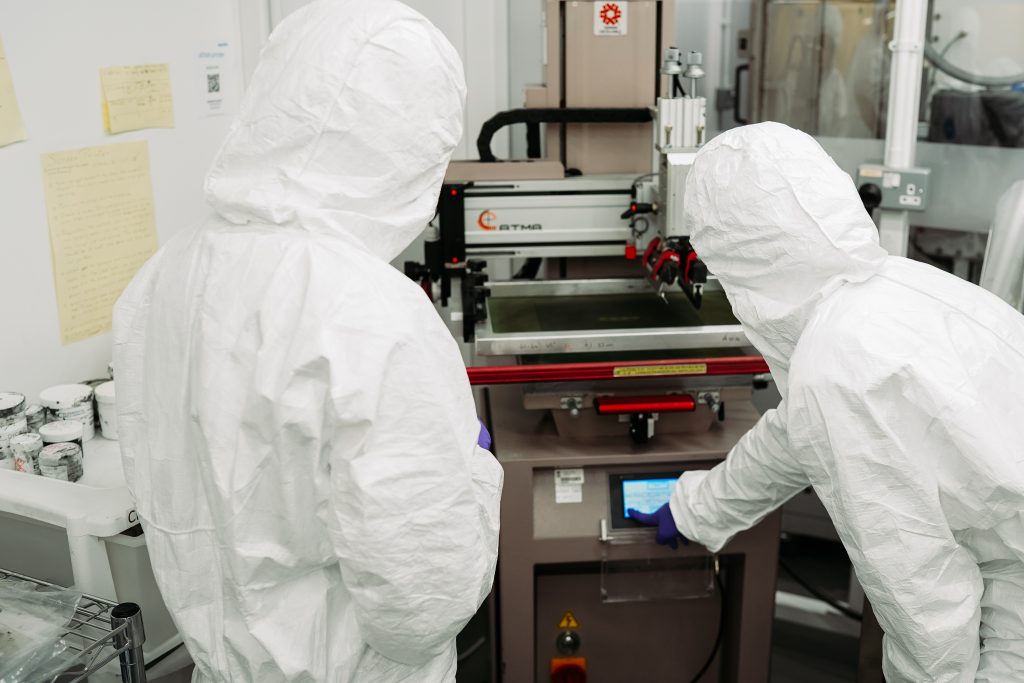
Researchers from SPECIFIC and COATED M2A programme at Swansea University have collaborated with the University of Bath to make a groundbreaking advancement in thermal storage research, developing a new efficient material that is easily scalable and can be sized and shaped to fit multiple applications.
Rebecca
Working alongside Tata Steel, Rebecca’s research has focused on assessing the effects of chemical composition, temperature and time on oxide scale formation in an Ultra-Advanced High Strength Steel and a High Strength Steel. The ultimate goal of Rebecca’s research is to control oxidation rates and oxide scale morphology. This will allow Tata to adjust their manufacturing processes in order to reduce the material loss and improve the surface quality of the steels.
Mathew
Mathew’s collaborative research between Swansea University and Tata Steel Colors has been based on the addition of alloying elements into widely utilised zinc-aluminium metallic coatings. The incorporation of magnesium into galvanising alloys has been steadily increasing across the sector, owing to its increased relative corrosion performance in given environments. His research has gone on to demonstrate where this newer coating could be used in the company’s product portfolio.
Rhodri
Rhodri Rees has completed his EngD researching advanced manufacturing techniques for medical applications. He originally joined Tata Steel on an apprenticeship before entering back into higher education studying for his bachelor’s and masters in mechanical engineering before taking on an EngD. He has enjoyed the range of opportunities offered including work with Calon Cardio and social aspects of being part of the cohort. He is now keen to continue sharing his technical abilities through teaching the future engineers.
Tim
Tim’s research has been around development of methods that allow in-situ performance monitoring of organically coated steel products used in the construction sector. Currently, performance is often only estimated from laboratory-based accelerated testing, whereas live monitoring via sensors could allow far more accurate lifetime and maintenance data, facilitating early failure detection. If these technologies prove effective, then they will offer great insights into not only the viability of warranty accompanying the products, but into appropriate coatings selection based on environment and location.
David
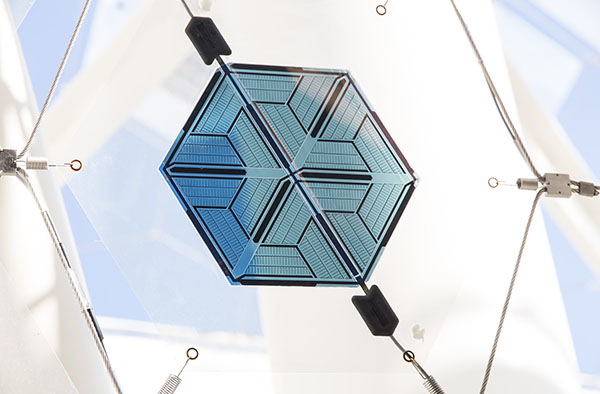
David joined Swansea University in 2010 to study for a foundation degree in General Engineering and went on to successfully complete a degree in Chemical Engineering with first class honours, in 2015. Now studying for an Engineering Doctorate, researching “Application of Perovskite Solar Cells onto flexible steel substrate”, Dave shares his motivations and experiences of further study.
Catherine – DECODING DEGRADATION
Organically coated (painted) steel is exposed to many conditions in service from the varied inclement weather conditions around the world, UV exposure and pollution. With some coated steel products now coming with a 40 year warranty it is vital to understand how these products will perform. Catherine discusses the challenges of applying our advanced testing techniques to understand the performance of these coatings after accelerated and real life exposure tests.
Sara – PAINTING THE FUTURE
Organically coated (painted) steel is exposed to many conditions in service from the varied inclement weather conditions around the world, UV exposure and pollution. With some coated steel products now coming with a 40 year warranty it is vital to understand how these products will perform. Catherine discusses the challenges of applying our advanced testing techniques to understand the performance of these coatings after accelerated and real life exposure tests.